July 14, 2026
The Secret of Translucent Privacy Window Screens: Scientific Principles From Material Density and Weaving Technology to Privacy Protection
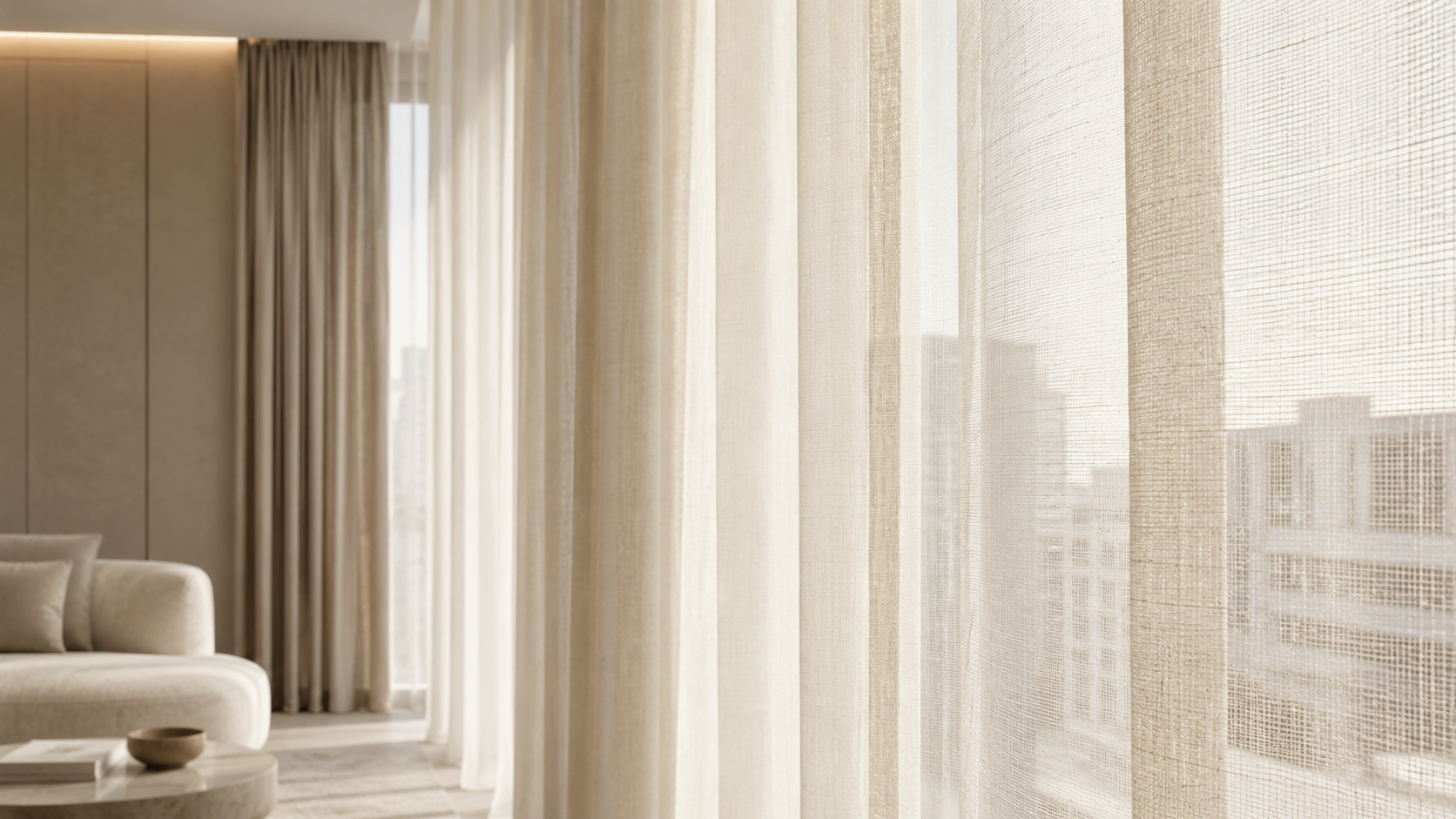
Table of Contents
1. Introduction
2. Core Scientific Principles of Translucent Privacy Window Screens
3. How Window Screen Material Density Balances Light and Privacy
4. Advanced Window Screen Weaving Technology and Structural Advantages
5. Practical Value of Window Screen Privacy Protection in Daily Scenarios
6. Industry Performance Data Comparison of Different Window Screens
7. Daily Selection and Usage Tips
8. Conclusion
9. Industry FAQ
1. Introduction
Translucent privacy window screens have become a mainstream soft furnishing choice for modern residential and commercial spaces.
Most users only know its visual effect, but few understand the professional logic behind it.
The unique "light transmission without perspective" effect is not a simple visual trick.
It relies on professional window screen material density, precise weaving technology and mature optical scientific principles.
This article deeply analyzes the core advantages of translucent window screens in privacy protection and light transmission.
2. Core Scientific Principles of Translucent Window Screens
The whole window screen scientific principle is based on light scattering and light intensity difference identification.
During the daytime, outdoor light intensity is far higher than indoor brightness.
The special woven structure scatters strong outdoor light, forming a visual isolation layer.
Outdoor observers cannot capture indoor details, realizing effective privacy protection.
Indoor light is soft and uniform, so users can still see outdoor scenery clearly.
3. Window Screen Material Density Design Logic
Material density is the basic core parameter that determines window screen performance.
Low-density window screens have large gaps, leading to transparent vision and zero privacy.
Excessively high density will block too much natural light and cause dim indoor space.
Professional translucent window screens adopt graded density matching standards.
It balances natural light transmittance and anti-perspective performance perfectly.
High-quality polyester fiber materials also enhance durability while ensuring reasonable density.
4. Advanced Window Screen Weaving Technology Analysis
4.1 Dense and Uniform Weaving Structure
Standard window screen weaving technology adopts fine cross weaving process.
The uniform fiber gap ensures even light dispersion without local light leakage.
This process avoids blurred vision or partial perspective defects effectively.
4.2 Stereoscopic Fiber Stacking Design
High-end translucent window screens use micro-stereoscopic weaving structure.
The stacked fiber layers refract light multiple times, strengthening anti-perspective effect.
It does not affect the overall light transmission, greatly improving window screen privacy protection ability.
5. Practical Application Value of Privacy Protection
Traditional curtains completely block light, making indoor space dark and stuffy.
Ordinary screen windows cannot block outdoor sight, resulting in privacy exposure risks.
Translucent privacy window screens solve the two major pain points at the same time.
It retains sufficient natural light and maintains indoor visual privacy all day long.
Suitable for bedrooms, living rooms, offices and high-rise residential scenarios.
6. Industry Performance Data Comparison
The following data is cited from 2025 Global Home Textile Optical Performance Test Report by IFTH, comparing three common window screen types in light transmittance and privacy performance.
Window Screen Type | Daytime Light Transmittance | Outdoor Perspective Rate | Long-Term Anti-Aging Performance |
Ordinary Low-Density Screen | 89% | 92% | Poor (Easy Deformation) |
Thick Full-Shading Screen | 35% | 3% | Medium |
Translucent Privacy Window Screen | 72% | 6% | Excellent |
Data shows that professional translucent window screens achieve the best balance of light transmission and privacy.
7. Selection and Usage Tips
Focus on uniform material density when purchasing translucent window screens.
Check the weaving tightness to avoid irregular gaps affecting privacy effect.
Regular dust cleaning can maintain stable light transmission and anti-perspective performance.
8. Conclusion
The translucent and non-perspective effect of window screens is a combination of optical physics and textile technology.
Reasonable window screen material density and sophisticated weaving technology are the core foundations.
The complete window screen scientific principle realizes dual protection of lighting and privacy.
It is the most cost-effective and practical soft furnishing solution for modern buildings.
9. Industry FAQ
Q1: Why do translucent window screens have privacy protection effect?
A1: It relies on light scattering scientific principle and high-precision weaving structure. The density design forms visual isolation under light intensity difference, blocking outdoor perspective while transmitting natural light.
Q2: Does higher window screen density mean better privacy?
A2: Not exactly. Excessively high density reduces light transmittance. Qualified translucent window screens adopt optimized density to balance lighting and privacy performance.
Q3: How does weaving technology affect window screen usage effect?
A3">Fine uniform weaving avoids local light leakage and perspective loopholes. Stereoscopic weaving structure enhances light refraction, making privacy protection more stable.
Q4: Will translucent window screens lose their effect at night?
A44: At night, indoor light is stronger. It is recommended to match thin curtains to strengthen privacy, which is the physical limitation of all translucent window screens.